

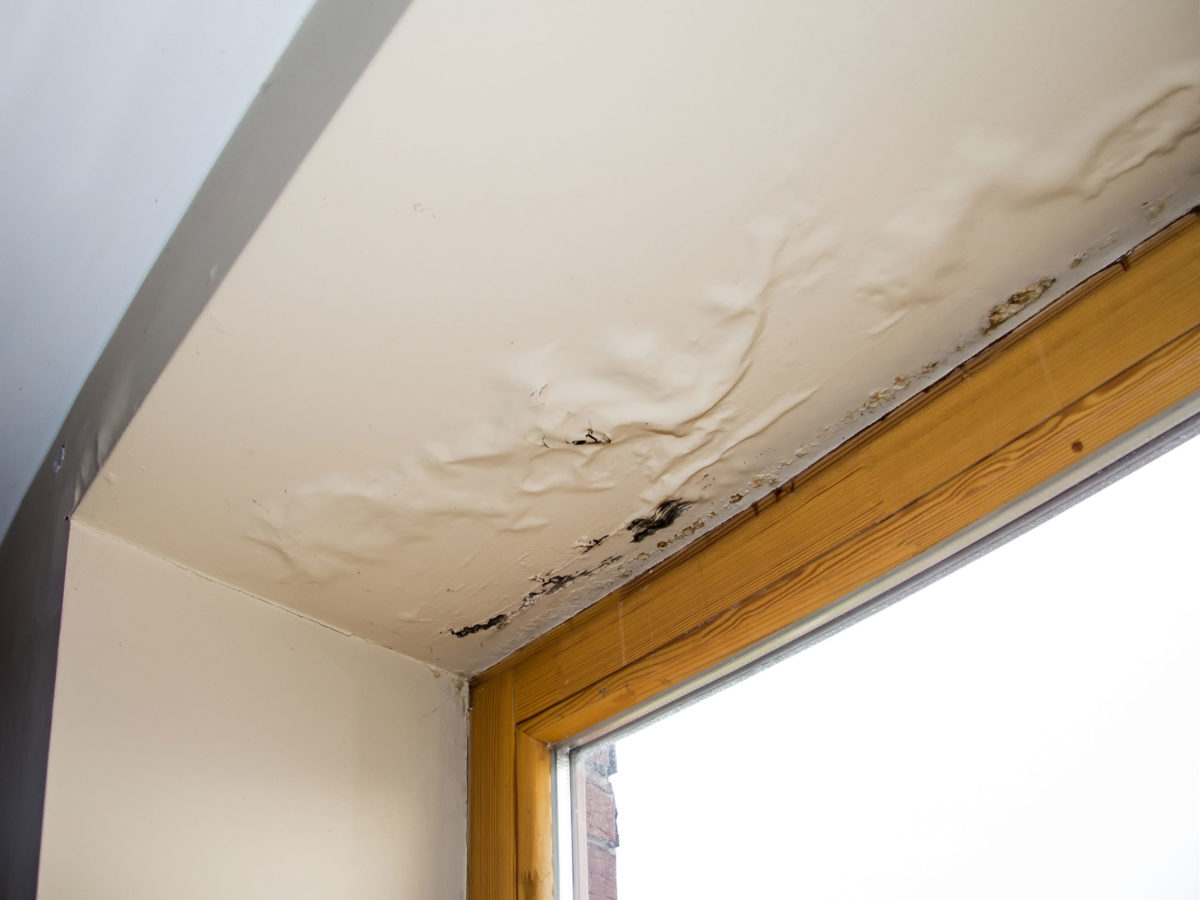
Humidity & Moisture Damage Roof Repair
Humidity and moisture damage roof repair in Charlotte, NC. We diagnose trapped moisture, blistering, ridging, and saturated insulation from interior humidity and failed vapor barriers, then fix the
Humidity & Moisture Damage Roof Repair
Humidity and moisture damage roof repair in Charlotte, NC. We diagnose trapped moisture, blistering, ridging, and saturated insulation from interior humidity and failed vapor barriers, then fix the cause.
Humidity & Moisture Damage Roof Repair work starts with a documented roof walk and ends with a scope owners can use.
The leak that never came from the sky Some of the most frustrating roof problems we are called to in Charlotte never started with a single drop of rain getting in.
The membrane is intact, the flashings are sound, and the roof still has wet insulation spreading across it, blisters rising in the field, and a steel deck quietly rusting from the top side.
Warm, moisture-laden air from the conditioned space below pushes up into the roof assembly, meets a colder surface, and condenses inside the insulation where nobody can see it.
By the time a facility manager near the I-77 South Park corridor or out in the University Research Park calls us about a soft spot underfoot, the moisture has often been accumulating for a year or more.
We treat this as a building-physics problem, not a patching problem.
That is the only repair that actually holds in a climate as humid as Charlotte's.
Why Charlotte's humidity is hard on commercial roofs Charlotte sits in a hot, humid Southeastern climate where summer dew points routinely sit in the seventies for weeks at a stretch.
Inside a building, that same humidity is being managed by HVAC, which means there is almost always a vapor-pressure difference trying to drive moisture up through the roof.
Those buildings generate moisture indoors all day, and the roof is the lid sitting over all of it.
We see this constantly on older buildings in NoDa and South End that were re-roofed without anyone reconsidering the vapor control, and on warehouses where a low-permeance membrane was installed over a deck with no vapor retarder underneath.
Pockets of moisture trapped between layers turn to vapor when the roof heats up, and the pressure lifts the membrane into bubbles that grow and eventually split.
Insulation boards swell and lose dimension as they absorb water, and the membrane telegraphs that movement as ridges running along the board joints.
Planning Humidity & Moisture Damage Roof Repair
Humidity & Moisture Damage Roof Repair should be evaluated through the roof condition, the building use, the owner's timing, and the level of documentation needed to make a decision.
The written record should make the next step clear without relying on broad claims or generic sales language.
Scope questions to answer early
Before a final scope is written for Humidity & Moisture Damage Roof Repair, the building owner should understand what roof areas were observed, what areas were not accessible, what assumptions are being made, and what conditions could change the price or schedule after work begins.
That includes active leak locations, ponding water, interior sensitivity, roof traffic, parapet and edge conditions, equipment curbs, drain condition, prior repairs, membrane age, substrate concerns, and whether the roof has already been recovered before.
Documentation that makes the proposal useful
A useful commercial roof proposal should do more than name a material and a price. It should describe the problem being solved, the areas included, the exclusions, the access plan, the safety or tenant constraints, and the closeout documents the owner should receive.
For Humidity & Moisture Damage Roof Repair, that documentation should connect back to the related service, system, capability, industry, property type, or location pages on this site so the owner can compare the decision against nearby roof paths instead of reading the page in isolation.
Maintenance and lifecycle planning
Even when the immediate work is a repair, the roof still needs a maintenance path. Drains need to remain clear, flashings need periodic checks, rooftop equipment work should be recorded, and any patched areas should be revisited after heavy weather.
For replacement, recover, or coating work, the maintenance plan becomes part of the lifecycle value. A roof that is documented at closeout and revisited on a schedule is easier to defend when warranty questions, future budgets, or property transactions come up.
How this page connects internally
Use roof work pages to compare specific scopes, roof system pages to compare assemblies, capability pages to understand reporting and planning support, and service area pages to keep the Charlotte context clear.
That internal structure is intentional. A commercial roof decision usually needs more than one page: the condition, the building type, the system, the service path, the documentation requirement, and the local access picture all work together.
What should happen before work starts
Before crews mobilize, the building should have a clear access plan, a communication point of contact, a weather plan, a material staging plan, and a way to protect tenants, inventory, equipment, or daily operations below the roof.
For Humidity & Moisture Damage Roof Repair, those pre-work details are part of the roof scope because they affect safety, schedule, cleanup, and whether the work can be completed without avoidable disruption to the commercial property.
Closeout and next-step record
After the work is complete, the owner should receive a usable record: what was done, where it was done, what materials were used, what photos document the work, what warranty or maintenance notes apply, and what conditions should be watched later.
That closeout record is what keeps the next roof conversation from starting over. It gives future maintenance teams, property managers, buyers, lenders, or ownership groups a cleaner picture of the roof's condition and the decisions already made.
If the next step after Humidity & Moisture Damage Roof Repair is not obvious, the safest path is to compare the condition record against repair, maintenance, coating, replacement, and system-selection pages before deciding how much work belongs in the current budget cycle. That comparison keeps the recommendation tied to the roof in front of the owner, and it keeps the final scope from drifting into work the building does not need.
Request a Written Scope